

Quick Answer
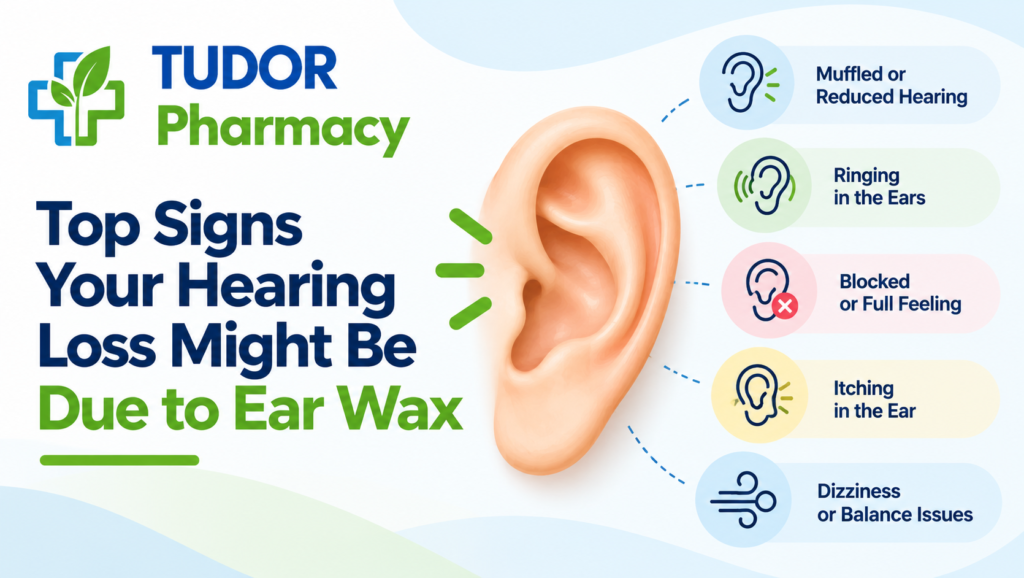
Hearing loss due to ear wax often causes muffled hearing, a blocked or full feeling, itching, tinnitus or mild ear discomfort. It may affect one ear more than the other. However, hearing loss has many causes, so persistent, sudden or rapidly worsening hearing changes should be professionally assessed rather than assumed to be wax.
Introduction
Noticing that conversations sound quieter or the television needs turning up can be worrying. Sometimes the explanation is simply impacted ear wax blocking sound from travelling normally through the ear canal.
Recognising the signs of hearing loss due to ear wax can help you know when an ear examination may be useful. It is equally important not to assume every hearing problem is caused by wax.
Tudor Pharmacy in Rickmansworth provides professional ear wax assessment and microsuction for adults aged 18 and over.
Key Takeaways
- Ear wax can temporarily reduce hearing when it blocks the ear canal.
- Muffled hearing is one of the most common symptoms.
- A blocked or full sensation often occurs alongside hearing changes.
- Tinnitus, itching and mild discomfort can also occur.
- Wax-related hearing loss may affect one ear more than the other.
- Cotton buds can push wax deeper and worsen blockage.
- Hearing that remains poor after wax removal needs further assessment.
- Sudden or rapidly worsening hearing loss requires urgent medical attention.
How Does Ear Wax Cause Hearing Loss?
Ear wax can reduce hearing when enough of it accumulates to obstruct the ear canal.
Ear wax, also called cerumen, normally protects the ear by trapping dust and other particles. Most wax gradually moves out of the ear naturally.
Problems occur when wax becomes impacted or blocks the canal. Sound then has more difficulty reaching the eardrum effectively, causing temporary conductive hearing loss.
Removing the obstruction may restore hearing if wax is the main cause.
Sign 1: Your Hearing Suddenly Sounds Muffled
Muffled or reduced hearing is one of the clearest signs of an ear wax blockage.
People often describe sounds as distant, dull or as though they are listening through a barrier.
You may notice conversations becoming less clear or struggle to hear speech properly.
Unlike some permanent types of hearing loss, wax-related hearing difficulty may improve after the blockage is safely removed.
Sign 2: One Ear Seems Worse Than the Other
Ear wax blockage often affects one ear more than the other.
The NHS lists difficulty hearing in one ear together with itchiness and a blocked feeling as possible signs of ear wax build-up.
One ear canal may naturally retain more wax because of its shape, hair growth or other local factors.
However, persistent one-sided hearing loss should not automatically be blamed on wax. An ear examination is needed to confirm the cause.
Sign 3: Your Ear Feels Blocked or Full
A feeling of pressure or fullness alongside hearing loss commonly occurs with impacted ear wax.
You may feel as though something is physically blocking the ear.
Some people describe the sensation as similar to having water trapped inside the ear.
Ear infections and pressure problems can cause similar symptoms, so fullness alone does not prove wax is present.
Sign 4: You Notice Ringing or Buzzing
Ear wax can sometimes contribute to tinnitus, which is hearing sounds without an external source.
Tinnitus may sound like ringing, buzzing, humming or another persistent noise.
When impacted wax is responsible, the tinnitus may improve after removal.
However, tinnitus has many possible causes. Persistent, one-sided or pulsating tinnitus should be assessed appropriately.
Sign 5: Your Ear Feels Itchy
Itching can occur when ear wax builds up inside the ear canal.
NICE includes itchiness among the symptoms associated with impacted ear wax.
It may be tempting to use a cotton bud or another object to scratch inside the canal.
Avoid doing this. Cotton buds can push wax deeper, irritate the canal and make blockage worse.
Sign 6: You Have Mild Earache or Discomfort
Impacted wax can sometimes cause mild ear discomfort or earache.
Pressure from accumulated wax may make the canal feel sore or uncomfortable.
Severe pain, discharge, fever or significant swelling is less typical of uncomplicated wax and may suggest infection or another ear condition.
Seek appropriate medical advice if these symptoms occur.
Sign 7: Your Hearing Aid Is Not Working as Well
Ear wax can interfere with hearing aids as well as your natural hearing.
Wax can block the ear canal and may also affect hearing-aid performance.
People who regularly wear hearing aids can be more prone to wax problems because the device may interfere with the ear’s normal wax-clearance process.
If your hearing aid suddenly seems less effective, checking the device and examining the ear can help identify the cause.
Sign 8: Your Symptoms Developed Alongside Ear Blockage
Wax becomes more likely when hearing loss occurs together with several typical wax symptoms.
For example, muffled hearing combined with fullness, itching or tinnitus may suggest impacted wax.
However, symptoms alone cannot confirm the diagnosis.
An otoscopic examination allows a trained professional to see whether wax is actually obstructing the canal.
Ear Wax Hearing Loss vs Other Hearing Loss
Wax-related hearing loss is usually temporary, while other causes may require different treatment or hearing support.
Hearing Loss Due to Ear Wax | Other Hearing Problems |
Often associated with blocked feeling | May occur without blockage |
Can affect one ear | May affect one or both ears |
Itching may occur | Itching may be absent |
Wax is visible on examination | Ear canal may be clear |
Often improves after wax removal | May persist after wax removal |
Usually temporary | Can be temporary or permanent |
NICE recommends excluding impacted wax and acute ear infections when adults first present with hearing difficulties.
If hearing remains reduced after these have been addressed, audiological assessment may be needed.
Why Does Ear Wax Build Up?
Wax builds up when it cannot leave the ear canal naturally.
Some people are more likely to experience blockage because they have narrow or damaged ear canals, excess ear-canal hair or skin conditions affecting the ear.
Regular use of hearing aids, earbuds or objects inserted into the ear may also interfere with natural clearance.
Age can also make wax harder and drier, making it more difficult for the ear to remove naturally.
Can Cotton Buds Make Hearing Worse?
Yes. Cotton buds can push wax deeper and turn a minor build-up into an impacted blockage.
They may remove a small amount of visible wax while pushing the rest further into the canal.
The NHS advises against putting cotton buds, fingers or other objects into the ear.
Ear candles and home ear-vacuum products are also not supported by good evidence for removing wax.
Can Ear Drops Help?
Suitable ear-softening drops may help uncomplicated ear wax clear naturally.
The NHS suggests olive or almond oil for some people with ear wax build-up. Almond oil should not be used by people with an almond allergy.
Drops should not be used if you have a perforated eardrum unless a healthcare professional advises otherwise.
If symptoms continue despite softening treatment, professional examination is sensible.
When Is Professional Ear Wax Removal Needed?
Professional removal may be appropriate when impacted wax is causing hearing loss, discomfort or other symptoms.
NICE recommends offering wax removal when it contributes to hearing loss or prevents examination of the ear.
Methods can include microsuction, electronic irrigation or suitable manual removal by trained professionals.
The right method depends on your ear history and clinical assessment.
How Does Microsuction Work?
Microsuction removes excess wax using controlled suction while the practitioner looks inside the ear.
At Tudor Pharmacy, an otoscopic examination is carried out first to assess the wax.
The procedure and consent are then discussed before microsuction begins.
Tudor Pharmacy also recommends suitable patients use olive oil ear spray for around five days before their appointment to soften the wax.
Does Hearing Improve Immediately After Wax Removal?
Hearing often improves quickly when impacted wax was the main cause of the problem.
Some people notice a clear difference immediately after treatment.
However, improvement depends on whether wax was responsible for all of the hearing difficulty.
If hearing remains reduced after successful removal, further medical or audiological assessment may be required.
What If Your Hearing Does Not Improve?
Persistent hearing loss after ear wax removal should not be ignored.
NHS guidance recommends seeing a GP if hearing has not returned after treatment for an ear infection or ear wax build-up.
NICE also recommends audiological assessment after impacted wax and acute infection have been excluded.
Other possible causes include age-related hearing loss, noise damage or middle-ear problems.
When Is Hearing Loss Urgent?
Sudden or rapidly worsening hearing loss requires urgent medical assessment.
Seek urgent GP advice or contact NHS 111 if you suddenly lose hearing in one or both ears.
Hearing that gets noticeably worse over several days or weeks also needs prompt assessment.
Do not assume sudden hearing loss is simply another ear wax blockage.
What Are Common Mistakes?
The biggest mistake is diagnosing ear wax without looking inside the ear.
Another common problem is repeatedly using cotton buds when hearing becomes muffled.
People may also delay assessment because they assume all gradual hearing loss is part of ageing.
An ear examination can quickly establish whether impacted wax is present and whether removal is appropriate.
Common Misconceptions
Ear wax always causes hearing loss
No. Normal amounts of ear wax are protective and usually cause no symptoms.
Muffled hearing always means wax
No. Ear infections and other hearing conditions can produce similar symptoms.
Cotton buds are the best way to clean blocked ears
No. They often push wax deeper into the canal.
Hearing should always return after wax removal
Not necessarily. Another underlying hearing problem may also be present.
More ear cleaning prevents future blockage
No. Excessive cleaning can irritate the canal and interfere with normal wax clearance.
How Can Tudor Pharmacy Help?
Tudor Pharmacy provides professional ear wax removal for adults in Rickmansworth.
The service includes an initial otoscopic examination, explanation and consent, professional microsuction and aftercare advice.
Tudor Pharmacy currently provides the service to people aged 18 and over and also offers at-home ear wax removal for people who have difficulty attending the pharmacy.
Tudor Pharmacy
3 Tudor Way, Berry Lane
Rickmansworth
WD3 4DF
If you are experiencing blocked ears or reduced hearing, booking an ear examination can establish whether impacted wax is contributing to your symptoms.
People Also Ask
How do I know if hearing loss is caused by ear wax?
Muffled hearing combined with fullness, itching or tinnitus may suggest wax, but an ear examination is needed to confirm it.
Can ear wax make you temporarily deaf?
A severe blockage can significantly reduce hearing, but complete hearing loss should be assessed rather than assumed to be wax.
Can ear wax affect only one ear?
Yes. Wax blockage commonly affects one ear more than the other.
Does tinnitus mean I have ear wax?
Not necessarily. Wax can cause tinnitus, but tinnitus has many other possible causes.
Will my hearing return after microsuction?
It often improves if impacted wax was the main cause of hearing loss.
When should I worry about hearing loss?
Sudden or rapidly worsening hearing loss needs urgent medical assessment.
Conclusion
Hearing loss due to ear wax often comes with muffled sound, fullness, itching or tinnitus.
Professional examination can confirm whether wax is responsible. If hearing remains reduced after removal or changes suddenly, seek further medical assessment.
Frequently Asked Questions
Sounds may seem muffled, quieter or less clear than usual.
Yes. Fullness or a blocked sensation is a common symptom.
The NHS lists vertigo among possible symptoms of ear wax build-up.
They can interfere with the normal movement of wax out of the ear.
No. They can push wax deeper.
Tudor Pharmacy recommends suitable patients use olive oil ear spray for around five days before treatment.
Arrange further medical or audiological assessment.
Tudor Pharmacy provides professional microsuction at 3 Tudor Way, Berry Lane, for adults aged 18 and over.