

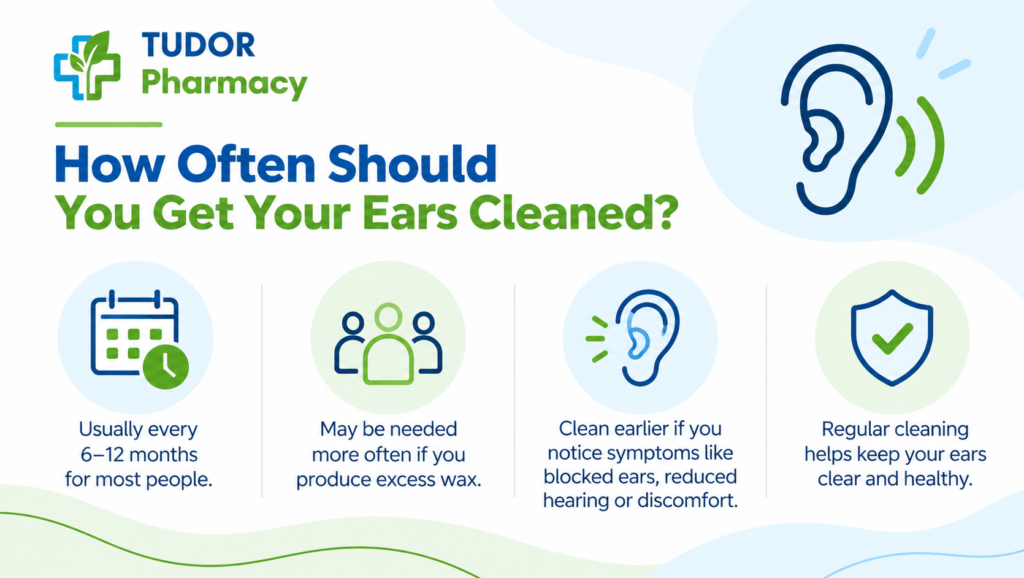
Quick Answer
There is no fixed schedule for professional ear cleaning. Most healthy ears clean themselves naturally and do not need routine internal cleaning. Professional earwax removal is usually appropriate when wax causes blocked hearing, discomfort, tinnitus or prevents examination. People prone to repeated wax build-up may benefit from individualised ear checks.
Introduction
Many people assume their ears should be professionally cleaned every few months, but healthy ears generally do not work that way.
Earwax, or cerumen, is a normal protective substance. It helps trap dust and debris and usually moves naturally towards the opening of the ear canal. NHS guidance confirms that earwax normally falls out by itself.
So, how often should you get your ears cleaned? The answer depends on whether you develop troublesome wax rather than how many months have passed since your previous treatment.
Tudor Pharmacy in Rickmansworth provides professional earwax removal using microsuction for adults aged 18 and over.
Key Takeaways
- Most ears do not need routine internal cleaning.
- Earwax is protective and should not be completely removed.
- Professional treatment is usually needed when wax causes symptoms.
- Cotton buds can push wax deeper and cause blockage.
- Hearing-aid users and people with narrow ear canals may develop wax more often.
- Recurrent wax may justify personalised periodic checks.
- Tudor Pharmacy offers microsuction earwax removal in Rickmansworth.
Do Your Ears Need Regular Cleaning?
Usually, no. The ear canal has a natural self-cleaning system.
Skin migration and normal jaw movement help transport wax towards the outer ear. Some wax should remain because it protects the canal from dust, dirt and infection.
You can gently clean the visible outer ear when necessary with a soft cloth. You should not routinely insert anything into the ear canal.
When Should You Have Earwax Professionally Removed?
Professional removal is generally appropriate when wax is causing symptoms or preventing a proper ear examination.
NICE recommends removing earwax when it contributes to hearing loss or other symptoms, or when it prevents clinicians from examining the ear properly.
Common signs include:
- Muffled or reduced hearing
- A blocked or full feeling
- Ear discomfort
- Tinnitus
- Itching
- Dizziness associated with wax blockage
If you have no symptoms and your ears are healthy, there is usually no reason to arrange removal simply because a certain amount of time has passed.
Who May Need Ear Checks More Often?
Some people are more prone to recurrent wax and may benefit from more regular assessment.
Wax build-up is more common in people who use hearing aids, older adults and those with narrow or unusual ear canals. Cotton buds and other objects inserted into the canal can also contribute to impaction.
People who repeatedly experience blockages may include:
- Hearing-aid users.
- People with narrow ear canals.
- Those who naturally produce harder or larger amounts of wax.
- Regular users of earplugs or in-ear devices.
- People with previous recurrent wax impaction.
There is still no universal “every three months” or “every six months” rule. The interval should reflect your individual pattern of wax build-up.
Routine Cleaning vs Symptom-Based Ear Care
For most people, symptom-based care is more appropriate than cleaning on a fixed calendar.
Approach | When It Makes Sense |
No routine internal cleaning | Healthy ears without symptoms |
Outer-ear cleaning | Whenever visible dirt needs gentle removal |
Wax-softening advice | When wax begins accumulating and products are suitable |
Professional assessment | Persistent blockage, hearing changes or recurrent wax |
Regular professional checks | Some people with repeated impaction or specific ear-care needs |
If you needed microsuction once, that does not automatically mean you need it repeatedly.
Why Should You Avoid Cotton Buds?
Cotton buds can push earwax deeper instead of removing it.
NICE specifically advises adults not to clean the ear canal with cotton buds or other small objects because they can push wax further down and may damage the canal or eardrum.
The NHS gives the same advice: do not use fingers or objects to remove wax because this can make the blockage worse.
Cleaning the outer ear is enough for most people.
Can Ear Drops Reduce the Need for Professional Cleaning?
Wax-softening drops may help some people, but they should not be used automatically by everyone.
The NHS advises that olive or almond oil can help soften uncomplicated wax build-up so that it moves out naturally. Drops should not be used when you have a perforated eardrum.
Tudor Pharmacy recommends suitable patients use olive-oil ear spray for around five days before an earwax-removal appointment to soften the wax.
If you repeatedly develop wax, ask a pharmacist or ear-care professional whether occasional softening is appropriate for you.
What Happens During Professional Ear Cleaning?
At Tudor Pharmacy, professional earwax removal starts with an ear examination rather than immediate suction.
The pharmacy describes its process as:
- Otoscope examination to assess the ear and wax.
- Explanation of the procedure and consent.
- Microsuction using a modern suction device.
- Aftercare advice to support ongoing ear health.
Microsuction removes wax using a small suction probe placed carefully within the ear canal. NHS hospital guidance describes it as a quick and effective procedure when performed by trained professionals with appropriate equipment.
How Often Should Hearing-Aid Users Have Their Ears Checked?
There is no single fixed interval for all hearing-aid users.
Hearing aids can interfere with natural wax movement, and excessive wax is more common among people who wear them.
If wax repeatedly affects your hearing aid, causes feedback or blocks your ear, discuss an individual review schedule with your audiologist or ear-care professional.
The aim is to monitor your actual wax pattern rather than automatically removing normal wax.
When Should You Seek Medical Advice Instead?
Not every blocked or painful ear is caused by wax.
Seek appropriate medical advice if you experience severe or persistent pain, discharge, bleeding, fever or a sudden change in hearing.
The NHS also recommends medical advice for significant hearing changes with earache or other concerning symptoms.
Sudden hearing loss should not be delayed because you assume the problem is earwax.
How Can Tudor Pharmacy Help?
Tudor Pharmacy offers professional earwax removal for adults in Rickmansworth.
Its Ear Wax Removal Service includes ear examination, microsuction and aftercare advice. The pharmacy also offers an at-home earwax-removal option for people who have difficulty attending the clinic.
Tudor Pharmacy
3 Tudor Way, Berry Lane
Rickmansworth, WD3 4DF
If blocked ears keep returning, an assessment can help determine whether you actually need regular professional cleaning.
Common Misconceptions
“Everyone should have their ears cleaned every six months.”
No. There is no standard cleaning interval for healthy ears.
“Earwax means my ears are dirty.”
No. Earwax is a normal protective substance.
“I should remove all visible wax.”
No. Some wax is normal and beneficial.
“Cotton buds prevent wax blockage.”
They can do the opposite by compacting wax deeper into the canal.
People Also Ask
How often should you get your ears professionally cleaned?
Only when needed. People with recurrent wax may need personalised periodic checks.
Should ears be cleaned every month?
No. Most healthy ears clean themselves naturally.
How do you know when your ears need cleaning?
Blocked hearing, fullness, tinnitus, itching or discomfort may indicate wax build-up.
Can too much ear cleaning damage your ears?
Yes. Inserting objects can irritate or injure the ear canal and push wax deeper.
Where can I get earwax removal in Rickmansworth?
Tudor Pharmacy provides professional microsuction earwax removal for adults.
Conclusion
So, how often should you get your ears cleaned? For most people, there is no routine timetable.
Healthy ears normally clean themselves, and professional removal should usually be considered when wax causes blocked hearing, discomfort, tinnitus or another problem.
If you repeatedly experience wax build-up, Tudor Pharmacy in Rickmansworth can examine your ears and help determine whether microsuction or an individual ear-care plan is appropriate.
Medical notice: This article provides general ear-health information and does not replace personalised medical assessment.
FAQs
No. Normal earwax should generally be left alone.
Yes. Earwax usually moves out of the ear canal naturally.
Not inside the ear canal.
Yes. Hearing aids may interfere with natural wax clearance.
No. Your ear should be assessed first.
No. It removes wax using controlled suction.
Tudor Pharmacy recommends olive-oil ear spray for around five days where suitable.
Its current earwax-removal service is listed for people aged 18 and over.