

Quick Answer
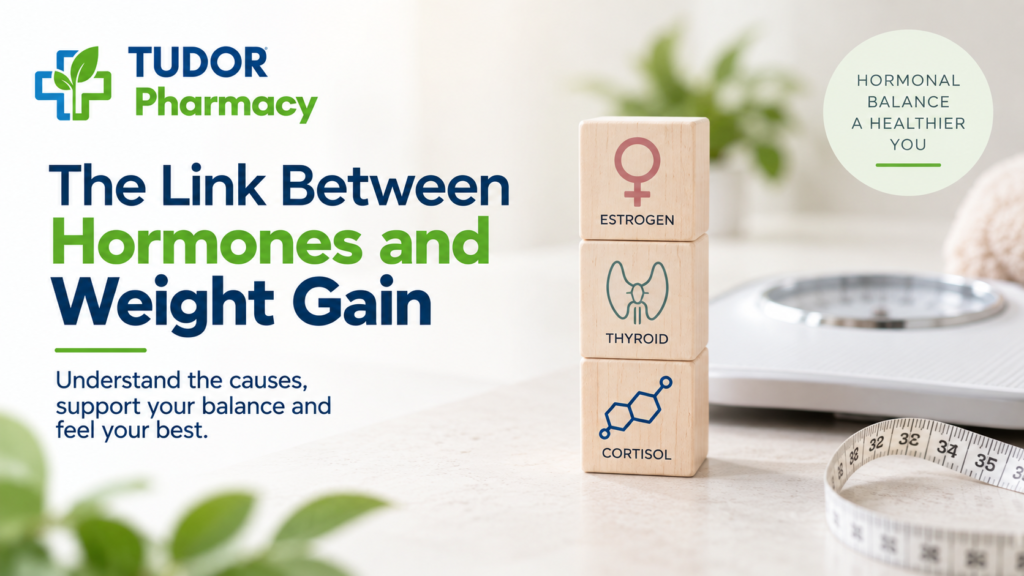
Hormones and weight gain can be linked, but hormones are only one part of the picture. Thyroid problems, PCOS, menopause, stress, sleep, medicines and lifestyle can all affect weight. If weight gain is sudden, unexplained or difficult to manage, professional advice can help identify the next step.
Introduction
Hormones and weight gain are often connected in people’s minds, especially when weight changes happen despite eating carefully or staying active. This can feel frustrating and confusing.
Hormones help control appetite, metabolism, blood sugar, periods, stress response and fat storage. When hormone balance changes, weight may become harder to manage. Tudor Pharmacy offers local weight loss support in Rickmansworth for patients looking for safe, structured help.
For general NHS guidance, you can also read about overweight and obesity in adults.
Key Takeaways
- Hormones can influence appetite, energy use and fat storage.
- Weight gain is usually caused by several factors, not hormones alone.
- Underactive thyroid, PCOS and menopause may affect weight.
- Stress and poor sleep can make weight management harder.
- Some medicines may contribute to weight changes.
- Sudden or unexplained weight gain should be checked.
- Tudor Pharmacy offers weight loss support in Rickmansworth.
What Is the Link Between Hormones and Weight Gain?
Hormones and weight gain are linked because hormones help regulate metabolism, hunger and how the body stores energy.
Insulin helps manage blood sugar. Thyroid hormones affect energy use. Sex hormones can influence body shape and fat distribution. Stress hormones may affect appetite, cravings and sleep.
However, hormones rarely act alone. Diet, activity, sleep, age, medical conditions and medicines also matter.
Which Hormonal Conditions Can Affect Weight?
Some hormone-related conditions can make weight gain more likely or weight loss more difficult.
Common examples include an underactive thyroid, PCOS, menopause and, more rarely, Cushing’s syndrome. These conditions may affect energy levels, periods, appetite, metabolism or fat distribution.
If weight gain comes with tiredness, irregular periods, hair changes, low mood, dry skin or new symptoms, it is worth speaking to a GP or healthcare professional.
Hormonal Weight Gain vs Lifestyle Weight Gain
Hormonal and lifestyle factors can overlap, so assessment is important.
Factor | Common Signs | Best Next Step |
Underactive thyroid | Tiredness, weight gain, dry skin, feeling cold | GP blood test |
PCOS | Irregular periods, acne, excess hair, weight changes | GP review |
Menopause | Body-shape change, hot flushes, sleep issues | GP or pharmacist advice |
Stress and sleep | Cravings, fatigue, irregular routine | Lifestyle support |
Diet and activity | Gradual weight gain | Structured weight plan |
The safest approach is to look at the whole person, not one symptom alone.
Can Menopause Cause Weight Gain?
Menopause can make weight management harder because hormone levels, sleep, mood and body composition may change.
Many people notice weight around the middle during perimenopause or menopause. This does not mean weight gain is unavoidable. Strength exercise, balanced meals, sleep support and medical advice can all help.
If symptoms are affecting daily life, speak to a GP or pharmacist about suitable support.
Can Thyroid Problems Cause Weight Gain?
An underactive thyroid can contribute to weight gain because the thyroid gland does not make enough hormones.
Other symptoms may include tiredness, dry skin, constipation, low mood, feeling cold and hair changes. A GP can usually check thyroid function with a blood test.
Do not assume every weight change is thyroid-related, but do seek advice if symptoms fit.
What Are Common Mistakes to Avoid?
The biggest mistake is assuming weight gain is only about willpower.
Other mistakes include following extreme diets, skipping meals, buying unverified supplements, ignoring symptoms or using weight loss medication without proper assessment.
A safer plan should include realistic nutrition, regular movement, sleep support, medical checks where needed and ongoing review.
How Can Tudor Pharmacy Help?
Tudor Pharmacy can support patients who want safe, structured weight loss guidance in Rickmansworth.
The pharmacy offers a Weight Loss Service designed to support sustainable weight management. Patients can also explore NHS services or contact Tudor Pharmacy for local healthcare support.
Tudor Pharmacy is located at:
3 Tudor Parade, Berry Lane
Rickmansworth
WD3 4DF
Common Misconceptions
One common misconception is that all weight gain is hormonal. Hormones may contribute, but food intake, activity, sleep, stress, age and medicines also play a role.
Another myth is that hormone-related weight gain cannot be improved. Many people benefit from structured lifestyle support and medical review.
Some people also think supplements can “balance hormones” quickly. Unverified products can be unsafe or ineffective, so professional advice is safer.
People Also Ask
Can hormones cause weight gain?
Yes, hormones can contribute to weight gain, especially with thyroid problems, PCOS, menopause or stress-related changes.
How do I know if weight gain is hormonal?
Look for other symptoms such as tiredness, irregular periods, hair changes, sleep issues or sudden unexplained weight gain.
Can stress hormones cause weight gain?
Stress can affect sleep, appetite, cravings and routine, which may make weight management harder.
Can weight loss help hormone balance?
For some people, gradual weight loss and healthier habits may improve metabolic and hormone-related symptoms.
Where can I get weight loss support in Rickmansworth?
Tudor Pharmacy offers a weight loss service and local healthcare support in Rickmansworth.
Conclusion
Hormones and weight gain can be connected, but weight changes usually have more than one cause. Thyroid conditions, PCOS, menopause, stress, sleep, medicines and daily habits can all affect weight.
Tudor Pharmacy can support patients in Rickmansworth with structured weight loss guidance and practical pharmacy advice.
Medical notice: This article provides general health information and does not replace personalised medical advice, diagnosis or treatment.
FAQs
Insulin, thyroid hormones, oestrogen, progesterone, testosterone and cortisol can all influence weight-related processes.
Yes. An untreated underactive thyroid can contribute to tiredness and weight gain.
PCOS can make weight gain more likely and weight loss more difficult for some people.
No. Menopause may make weight management harder, but weight gain is not guaranteed.
Speak to a GP if weight gain is sudden, unexplained or linked with other symptoms.
Do not use hormone products or supplements without medical advice.
Some medicines may affect appetite or weight. Ask a pharmacist or GP before stopping any medicine.
Start with professional advice, realistic goals, balanced meals, regular activity and medical checks where needed.